
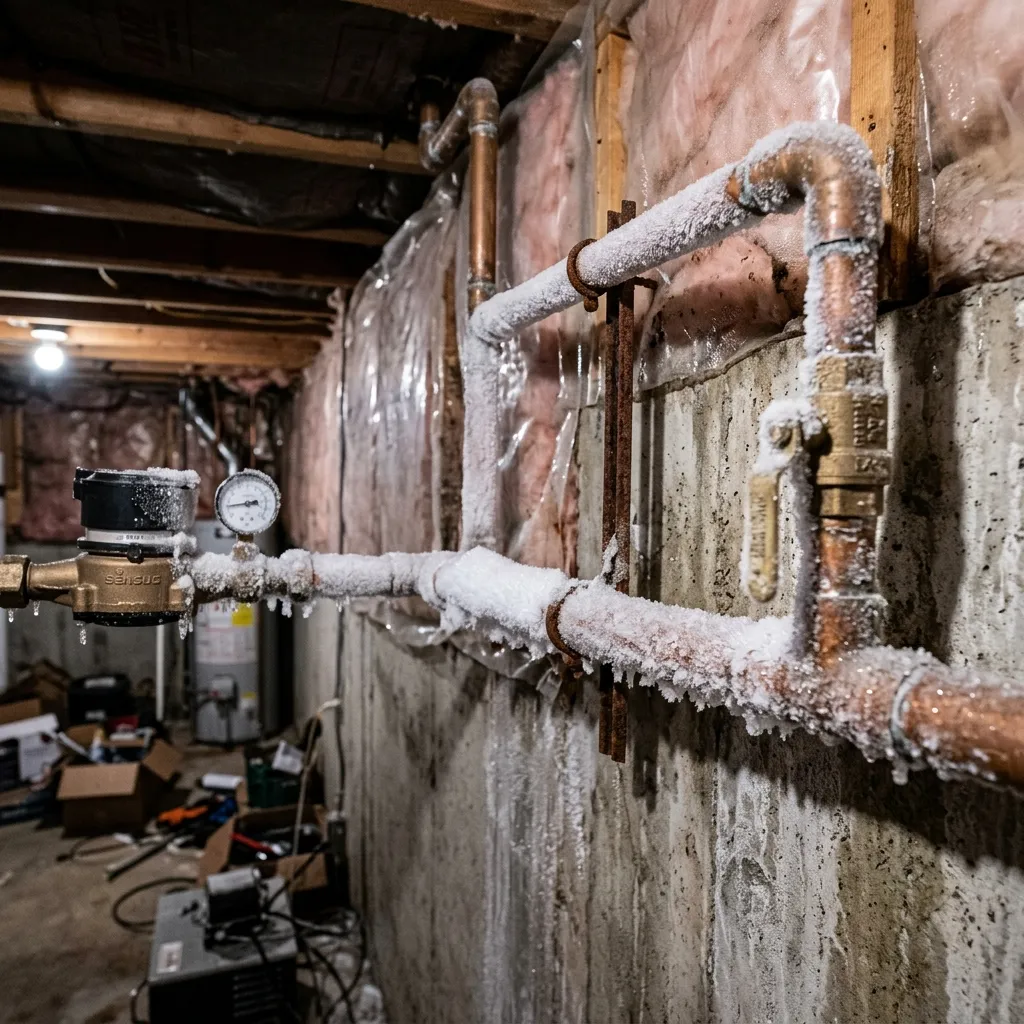
Every Anoka homeowner knows how brutal a Minnesota winter can be. When temperatures drop to -15°F or lower — which happens several times each season — the risk of frozen pipes becomes very real. A frozen pipe brings serious trouble. A burst pipe can release hundreds of gallons of water in minutes, causing thousands of dollars in structural damage.
The good news: frozen pipes are almost entirely preventable with the right preparation. This guide covers steps to take before cold hits. You will also learn warning signs and what to do if lines freeze.
Why Pipes Freeze in Anoka, MN Homes
Water expands when it freezes. Sub-zero drafts in uninsulated crawl spaces, exterior walls, or garages freeze trapped water. Expanding ice inside generates enough force to split pipe walls.
The most vulnerable pipes sit along exterior walls or in unheated crawl spaces. Outdoor spigots, garage supply lines, and exterior sink plumbing also freeze easily.
7 Steps to Prevent Frozen Pipes This Winter
1. Insulate Your Most Vulnerable Pipes
Foam pipe insulation sleeves are inexpensive and available at any hardware store. Wrap any pipe that runs through an unheated space — crawl spaces, attic runs, garage walls, and along exterior wall cavities. For extra protection in very cold areas, use heat tape or self-regulating heat cable underneath the foam wrap.
2. Disconnect and Drain Outdoor Hose Bibs Before the First Freeze
This is one of the most commonly forgotten steps. Even frost-free hose bibs can freeze if a hose is left attached — the hose traps water in the faucet body, preventing it from draining. Disconnect garden hoses before freeze season begins. Close the indoor shutoff valve feeding each spigot, then open the outdoor bib to drain residual water.
3. Keep Your Thermostat at Minimum 55°F
During cold snaps, many homeowners turn the heat way down when leaving for work or vacation. The money saved on heating bills is rarely worth the cost of a burst pipe. Keep your thermostat set to at least 55°F at all times during winter months, even if the house is empty.
4. Open Cabinet Doors Under Kitchen and Bathroom Sinks
Cabinets on exterior walls act as insulating barriers that keep warm house air away from the pipes inside. On especially cold nights (below 10°F), open the doors under your kitchen and bathroom sinks to let warm air circulate around the pipes.
5. Let a Trickle of Water Run on Extreme Cold Nights
Moving water is much harder to freeze than standing water. During extreme cold stretches below -10°F, let a slow trickle run from the faucet farthest from your main water entry point. Focus on faucets served by pipes along exterior walls.
6. Seal Air Leaks Near Pipes
Cold outdoor air can enter your home through gaps around electrical outlets, pipe penetrations, and foundation cracks. Use expanding foam or caulk to seal any openings where pipes run through exterior walls or the foundation. Even a small gap allows enough cold air to freeze a pipe on a brutal Minnesota night.
7. Know Where Your Main Shutoff Valve Is
If a pipe does freeze — or worse, burst — being able to shut off the water supply immediately is critical. Ensure every adult in your household knows where the main shutoff valve sits. It usually rests near the basement water meter or utility room.
Signs a Pipe Has Already Frozen
Watch for key warning signs. These include zero faucet flow on cold mornings, frost on exposed lines, or visible pipe bulging and cracking.
If you suspect a frozen line without a burst, apply gentle heat with a hair dryer or warm towels. Start from the faucet end and work outward. Keep the faucet open so steam has a place to escape. Never use an open flame.
What Happens If a Pipe Bursts
If water floods from a wall or ceiling, shut off the main water valve immediately. Turn off breaker power near wet areas, drain faucets, and call a plumber. A catastrophic burst pipe requires immediate emergency plumbing service and professional pipe repair to isolate, replace, and pressure-test the ruptured section. Do not attempt to repair a burst pipe with tape or clamps as a long-term fix.
The Bottom Line
Frozen pipe prevention costs very little. Spending $30 on foam insulation and 1 hour of prep can prevent $3,000 to $15,000 in burst pipe water damage. Follow these seven steps every fall and your plumbing will come through even the worst Minnesota winter without incident. If you would like a plumber to inspect your home’s vulnerable pipes before winter arrives, call us at (763) 342-0957 for a same-day assessment.