
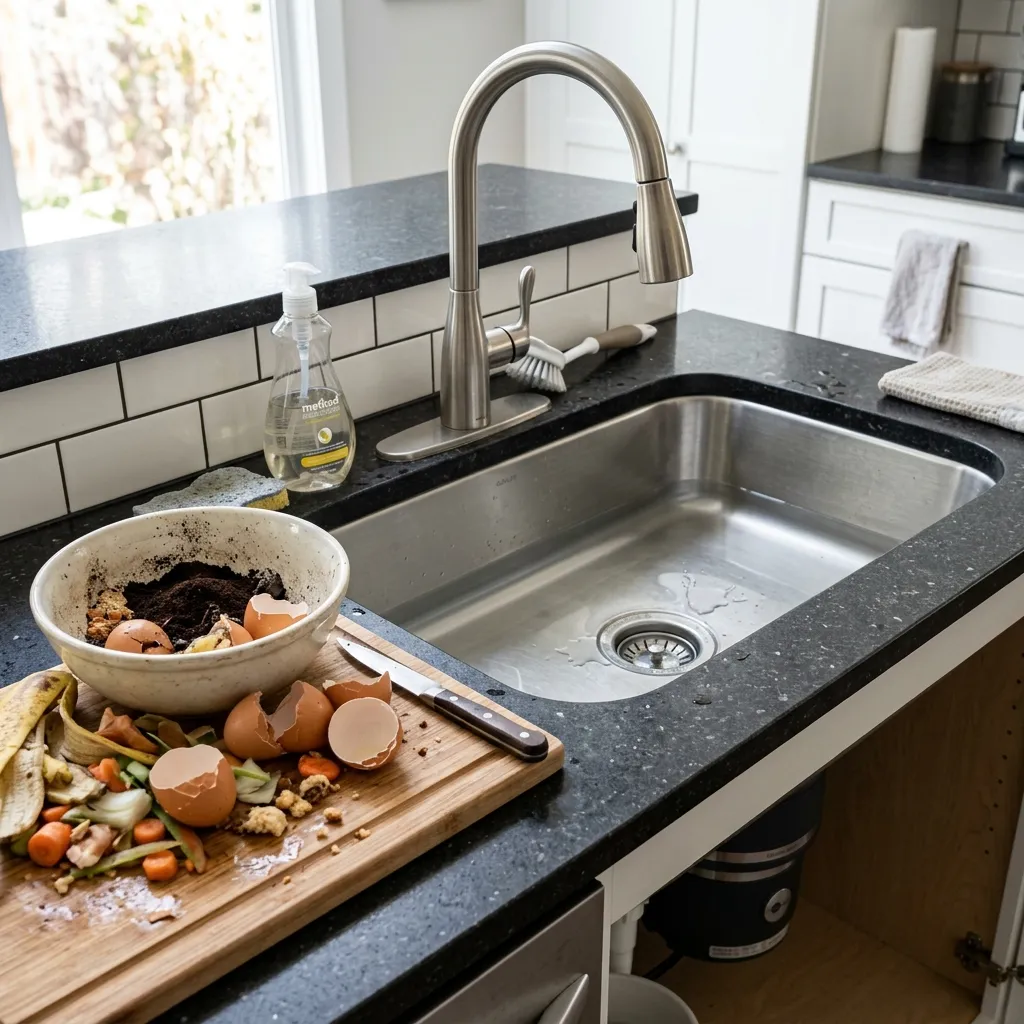
Your kitchen garbage disposal is a convenience, not a trash can. It is designed to handle small amounts of soft food waste that are rinsed away with running water — nothing more. Every week we receive calls from Anoka homeowners facing kitchen clogs. Most stem from items that belong in regular trash.
Knowing what to avoid prevents expensive drain cleaning calls and appliance burnout.
The Big Offenders: What Never Goes in a Garbage Disposal
Grease, Fats, and Cooking Oils
This causes more kitchen drain clogs in Anoka than anything else. Warm grease liquefies easily, but solidifies as it cools inside pipe lines. This sticky coating traps passing food debris. Never pour cooking grease down any plumbing fixture.
Let oil solidify in a jar, then toss it in the trash. Running hot tap water simply pushes grease deeper before it hardens.
Coffee Grounds
Coffee grounds seem harmless, but they do not dissolve in water. They settle in pipe traps and mix with oils to form dense sludge. Our technicians clear coffee sludge weekly, so always discard grounds into compost or trash.
Eggshells
A persistent myth holds that eggshells sharpen disposal blades. They do not. The thin membrane inside the shell wraps around the disposal shredder ring and can accelerate wear. The shells themselves grind into very fine particles that combine with grease to form sticky deposits inside pipes.
Pasta, Rice, and Bread
Starchy foods absorb water and swell. Cooked pasta, rice, and bread will continue expanding inside your pipes and trap other particles as they go. A small amount of leftover rice may seem harmless — but it adds up over months and contributes to drain buildup.
Fibrous Vegetables
Celery, asparagus, artichoke leaves, and corn husks have long stringy fibers that wrap around disposal components and jam the motor. Potato peels are another common offender — they contain starch that forms a thick paste. These all belong in the trash or compost.
Bones and Fruit Pits
Your disposal is not designed to grind hard materials. Chicken bones, fruit pits, seeds, and shells dull internal teeth. They frequently jam or burn out the electric motor. Even small bones from chicken wings are too hard for typical household disposals.
Non-Food Items
This includes paper towels, plastic wrap, bottle caps, rubber bands, and twist ties — items that occasionally find their way to the kitchen sink. These items jam the disposal immediately or pass into the drain and cause clogs downstream. Keep a small trash container next to the sink as a reminder to toss non-food items separately.
What Your Disposal CAN Handle
Disposals handle small portions of soft food waste reliably. Safe items include chopped vegetables, fruit trimmings without pits, ice cubes, and small citrus peels. Always run cold tap water during operation. Let water flow for 30 seconds after grinding to flush all debris.
Signs Your Kitchen Drain Needs Professional Cleaning
Slow drainage, standing sink water, or foul odors signal deep pipe blockages. These symptoms indicate grease accumulation that requires professional drain cleaning. Chemical openers offer temporary relief but risk corroding older plumbing. Professional snaking or 4,000-PSI hydro jetting restores full drain flow safely.
The Simple Rule to Remember
When in doubt, throw it out. Treating your disposal as a rinse-aid protects blades and pipes from costly damage. Keep a small waste bin near the sink for scraps. This simple habit keeps your kitchen plumbing working smoothly for 10 or more years.