
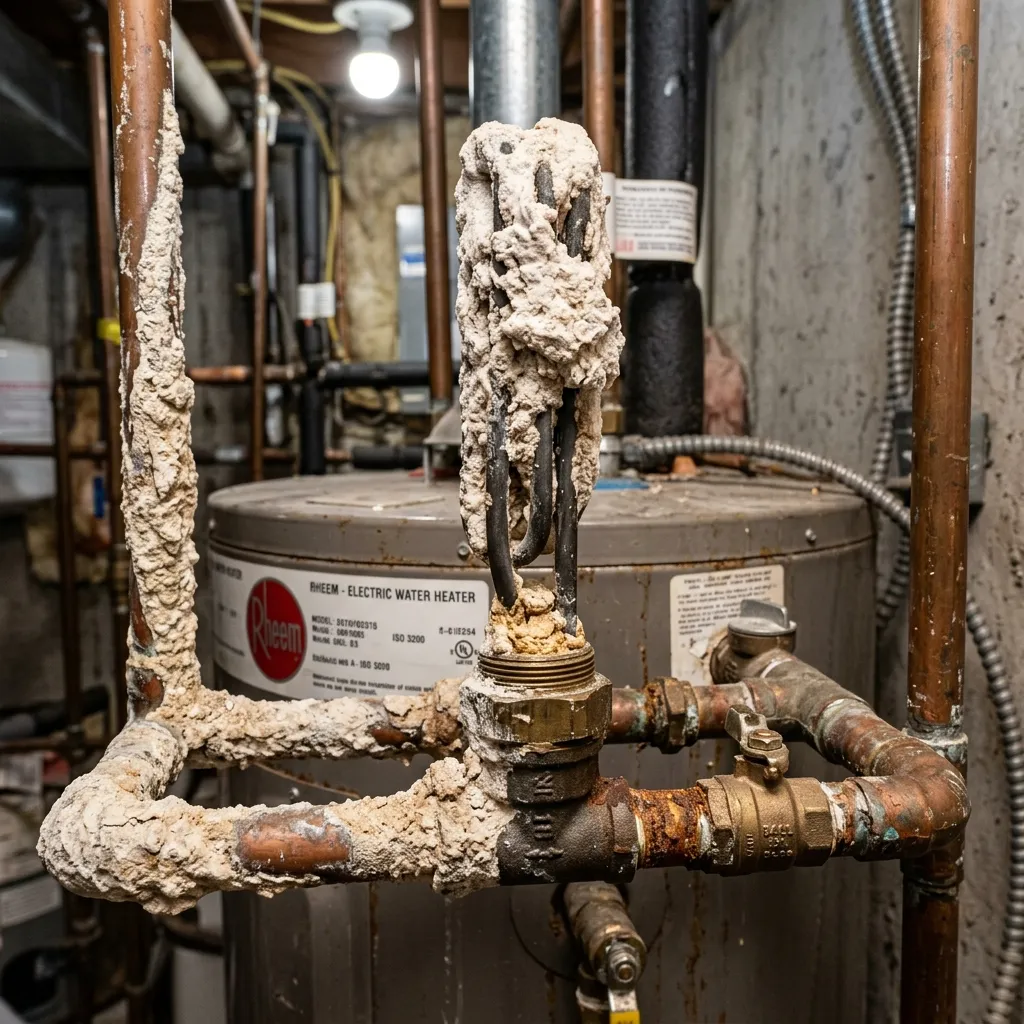
Anoka water is notoriously hard. Local groundwater aquifers carry heavy calcium and magnesium deposits, measuring between 15–25 grains per gallon. Anything above 10.5 GPG is classified as very hard. This mineral load leaves white spots on dishes and builds heavy scale inside your water heater tank.
What Hard Water Does Inside Your Water Heater Tank
Every time hot water is drawn from your tank, minerals dissolved in the water drop out of solution as the water heats up. These calcium and magnesium deposits — commonly called lime scale or sediment — settle to the bottom of the tank. Over months and years, the buildup becomes a thick insulating layer between the burner and the water.
Sediment acts like 1 inch of sand at the bottom of a cooking pot. Your burner works harder and runs longer to heat the same volume of water. This leads to higher monthly utility bills, accelerated burner wear, and premature tank failure.
Signs Your Anoka Water Heater Has Sediment Buildup
- Rumbling, popping, or banging sounds — this is water trapped under hardened sediment being superheated and forcing its way through
- Running out of hot water faster than you used to — scale displacement reduces tank capacity
- Longer heating recovery times — it takes noticeably longer for hot water to return after a shower
- Higher gas or electric bills with no other obvious cause
- Rusty or discolored hot water — often a sign the anode rod is depleted and the tank is corroding
How Sediment Shortens Water Heater Life in Anoka
A standard tank water heater is rated for 8–12 years of service under normal conditions. In Anoka’s hard water environment, without proper maintenance, that lifespan can drop to 5–7 years. The sediment causes overheating at the bottom of the tank, which stresses the glass lining and accelerates corrosion. Once the tank begins to rust internally, replacement is the only option — there is no repair for a corroded tank.
What You Can Do Right Now
Annual Tank Flushing
Flushing sediment once per year is essential maintenance. Attach a garden hose to the bottom drain valve and run it to a floor drain. Shut off cold supply water and open the drain valve to flush scale out. In Anoka homes, substantial chalky calcium buildup exits during this flush.
Anode Rod Inspection
The anode rod is a sacrificial magnesium or aluminum rod inside the tank that corrodes in place of the tank itself. In hard water, these rods deplete faster than the 3–5 year replacement cycle most manufacturers recommend. Have a plumber inspect and replace the rod every 2–3 years in Anoka’s conditions.
Consider a Water Softener
The best long-term solution removes minerals before they enter the tank. A whole-home water softener installation in Anoka extends heater lifespan significantly. It reduces energy consumption by 15–25% and protects plumbing throughout your home.
When to Repair vs. Replace Your Anoka Water Heater
Units under 8 years old with minor sediment noises usually need professional water heater repair. A professional tank flush and fresh anode rod restore proper function.
Units over 10 years old with base leaks or rust require complete replacement. Upgrading to a modern high-efficiency unit pays back in monthly utility savings within 3 to 5 years.
The Bottom Line for Anoka Homeowners
Hard water is common in Anoka, but tank destruction is avoidable. Annual flushing and timely anode rod replacement keep units operating efficiently. Adding a water softener provides total protection against mineral buildup.
Do not wait for cold showers to address sediment. Simple annual maintenance prevents premature failure in Anoka’s mineral-heavy water.