
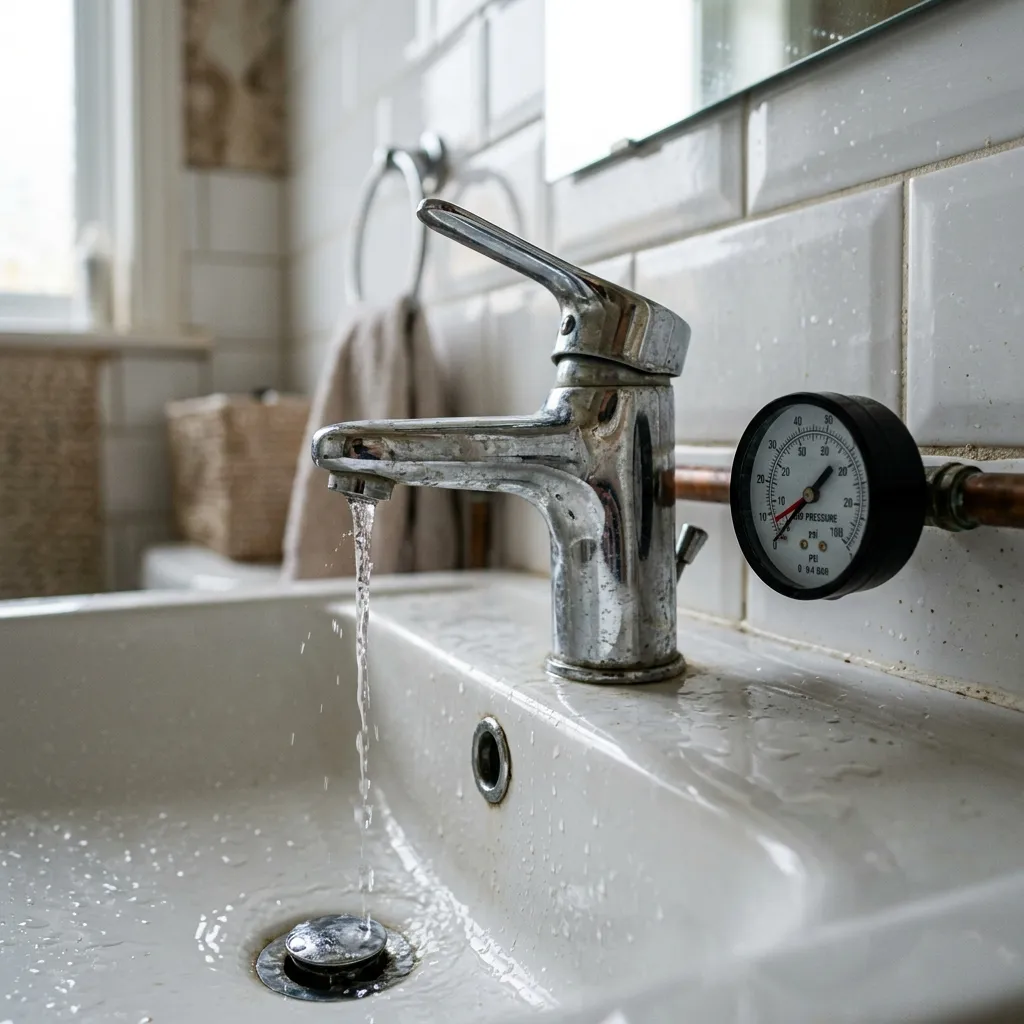
Weak shower flow and slow-filling kitchen faucets are frustrating issues for Anoka homeowners. Low water pressure has several potential causes. Some issues are minor, while others require immediate professional repairs.
This guide explains common causes of weak pressure and outlines proven diagnostic steps.
Start Here: Is It One Fixture or the Whole House?
The first question to answer is whether the low pressure affects only one faucet or fixture, or every faucet throughout the house simultaneously. The answer dramatically narrows down the cause.
Low pressure at one fixture only typically indicates a clogged aerator. Hard water minerals cause heavy screen buildup. A partially closed supply valve or failing faucet cartridge can also restrict local flow.
Low pressure throughout the whole house points to a problem with the water main, pressure regulator, or supply lines — and requires a more thorough investigation.
6 Common Causes of Low Water Pressure in Anoka, MN Homes
1. Clogged Aerators and Showerheads
Anoka’s hard water leaves calcium and magnesium deposits inside faucet aerators and showerhead nozzles over time. These mineral buildups can reduce flow at a single fixture to a fraction of what it should be while every other faucet runs normally. Unscrew the aerator (the small screen at the faucet tip) and soak it in white vinegar overnight — most clogs clear completely. For showerheads, fill a plastic bag with vinegar, tie it around the showerhead, and leave it for several hours.
2. Partially Closed Main or Fixture Shutoff Valve
If pressure dropped after recent plumbing work, a shutoff valve may remain partially closed. Check the main shutoff valve near your basement water meter. Ensure the handle is turned completely open. Check under-sink shutoff valves for affected fixtures as well.
3. Failing Pressure Reducing Valve (PRV)
Most Anoka homes built after the 1970s have a pressure reducing valve where the water service line enters the house. This valve reduces incoming municipal pressure (which can be 80–150 PSI) to a safe 40–80 PSI for household use. PRVs typically last 10–15 years — when they fail, they often stick in the nearly-closed position, resulting in dramatically low pressure throughout the home. A PRV replacement is a straightforward job for a licensed plumber.
4. Mineral Scale Inside Supply Pipes
Older Anoka homes with galvanized steel pipes suffer from internal scale buildup. Decades of hard water restrict pipe diameter and choke flow. Installing whole-home water filtration systems or softeners helps protect modern fixtures from mineral deposits.
Heavily scaled steel pipes cannot be cleaned and require replacement. Modern copper or PEX lines prevent mineral buildup permanently. Professional pipe repair and repiping in Anoka eliminates chronic pressure loss.
5. A Hidden Leak in the Supply Line
A supply line leak causes dramatic pressure loss throughout your home. Underground service lines between the street and foundation are especially vulnerable. If your water meter spins while taps are off, suspect a leak. Wet yard spots also indicate buried pipe ruptures requiring urgent repair.
6. Peak Demand from Neighbors
Older Anoka neighborhoods with smaller mains experience neighborhood-wide demand surges. Pressure drops occurring only from 6–9 AM or 5–8 PM usually point to city supply volume. If pressure normalizes during midday, report the pattern to Anoka public utilities.
When to Call an Anoka Plumber for Low Pressure
Call a licensed plumber if pressure drops across all fixtures simultaneously. Unexplained pressure loss, spinning water meters, and 15-year-old PRV valves also require professional diagnosis. Plumbers use calibrated pressure gauges to identify whether you need valve adjustments, line repairs, or complete repiping.
Quick Fixes You Can Do Right Now
Before calling for service, clean faucet aerators in white vinegar for 4 hours. Confirm your main water shutoff valve is fully open. Check that irrigation systems or laundry machines are not running simultaneously. Testing multiple fixtures confirms whether pressure loss is localized or whole-home.