
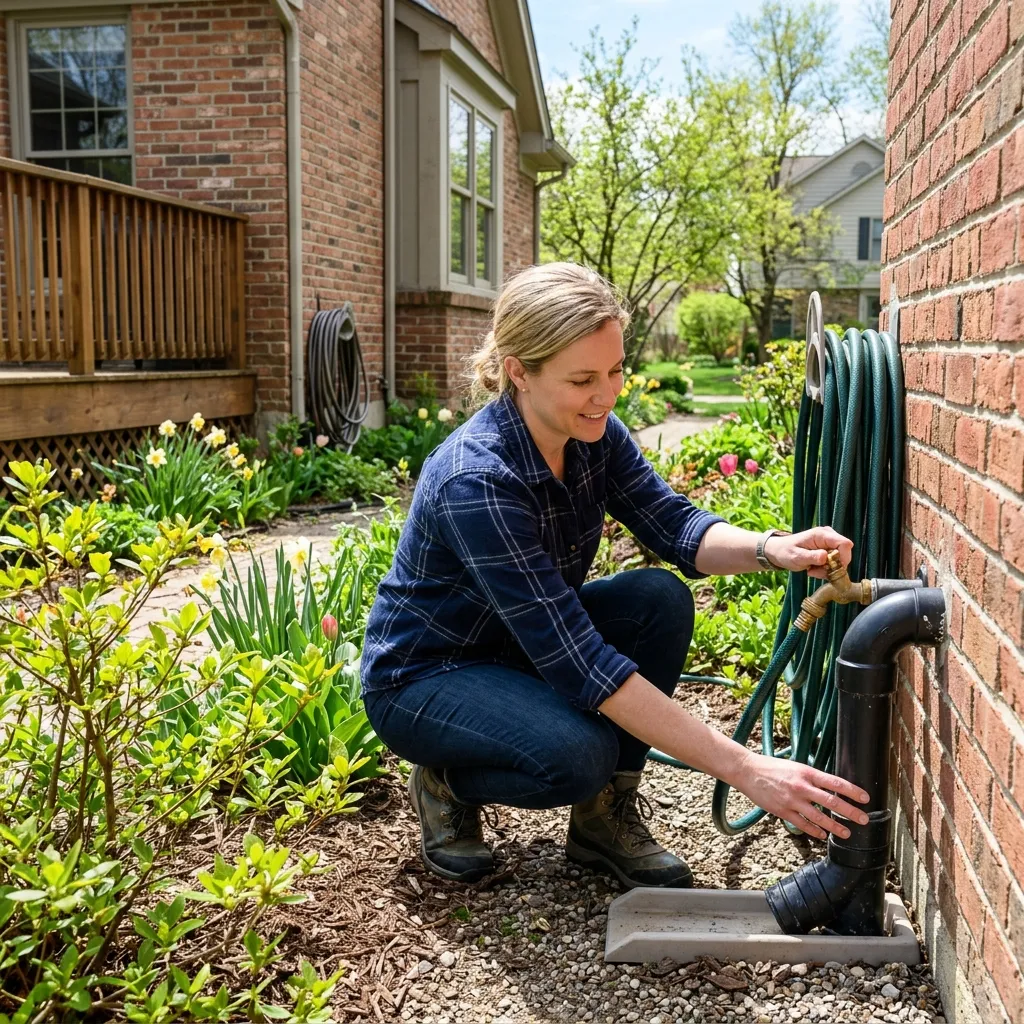
Anoka winters place heavy stress on residential plumbing. Deep frost cycles and freezing weather strain supply lines, joints, and outdoor fixtures. When spring arrives, inspect your system immediately. Catching winter damage early prevents costly water emergencies.
Use this checklist to work through your home’s plumbing system each spring. It takes about two hours and can catch problems before they become expensive.
Outdoor Plumbing: First Priority in Anoka Spring
✓ Reconnect and Test All Outdoor Hose Bibs
Reopen indoor shutoff valves feeding your outdoor spigots once freezing temperatures pass. Turn each faucet on and verify full water flow. Check for leaks around the spigot body and interior basement walls. Any dripping indicates freeze damage requiring valve replacement.
✓ Walk Your Yard and Look for Pipe Damage Indicators
Walk the underground route of your water service and sewer lateral after snow thaws. Inspect the lawn from your foundation toward municipal utility connections. Look for ground sinkholes, soggy soil, or unusually lush grass patches. These symptoms signal underground line damage caused by frost heave.
✓ Clean Out Window Well Drains
Window wells collect debris over winter — leaves, mulch, and ice melt residue. If window well drains are clogged when spring rains arrive, water can back up against basement windows and enter the home. Clear the drain and confirm water flows freely.
Interior Plumbing Inspection
✓ Check Under All Sinks and Around All Toilets
Inspect under every kitchen and bathroom sink. Check P-traps, supply lines, and valves for moisture, white mineral crust, or corrosion. Check toilet bases for rocking movement, stained flooring, or bad odors. Any movement indicates a failing wax seal.
✓ Test Every Toilet for Running
A running toilet can waste 200 gallons of water per day. Add a few drops of food coloring to the toilet tank and do not flush for 15 minutes. If color appears in the bowl, the flapper is leaking and needs replacement — a simple, inexpensive fix that immediately stops water waste.
✓ Check Water Pressure
Attach an inexpensive pressure gauge to a hose bib and check your home’s water pressure. Anoka homes should read 40–80 PSI. Pressure above 80 PSI stresses pipe joints, supply hoses, and appliance connections. If it is running high, a pressure reducing valve (PRV) adjustment or replacement will protect your entire plumbing system.
Sump Pump Testing: Critical for Anoka, MN Homes
✓ Test Your Sump Pump Before Spring Rains Arrive
Pour a 5-gallon bucket of water into your sump basin. Verify that the pump activates quickly and clears water completely. If the motor hums, grinds, or fails to start, schedule immediate sump pump repair before heavy spring rains arrive.
✓ Inspect the Discharge Line
Confirm the sump pump discharge line exits the home and terminates at least 6 feet from the foundation on a downhill slope. If the discharge terminates too close to the house, water simply recirculates back into the basement — defeating the pump entirely.
Water Heater and Water Quality Check
✓ Check the Water Heater for Corrosion and Sediment Noise
Look at the base of the water heater for rust staining, moisture, or mineral scale buildup around the drain valve. Turn on a hot water tap and listen while the heater runs — rumbling, popping, or banging indicates sediment buildup that should be flushed. Check the pressure relief valve by briefly lifting its lever — it should release a brief burst of water and reseal cleanly. If you notice signs of corrosion or persistent heating problems, schedule prompt water heater repair in Anoka before summer demand peaks.
✓ Inspect Your Water Softener (if installed)
Check the brine tank for salt level and salt bridges (a crust that forms across the salt surface, preventing regeneration). A salt bridge can make the softener appear to be functioning while actually not regenerating — leaving hard water running through your pipes undetected.
When to Call a Professional
Most checklist tasks are simple DIY inspections. However, call a licensed plumber if you detect leaks inside walls or under concrete slabs. Sump pump failures, water heater corrosion, and underground leaks also require professional service.
Fixing issues in early spring prevents severe structural damage during humid Minnesota summers.