
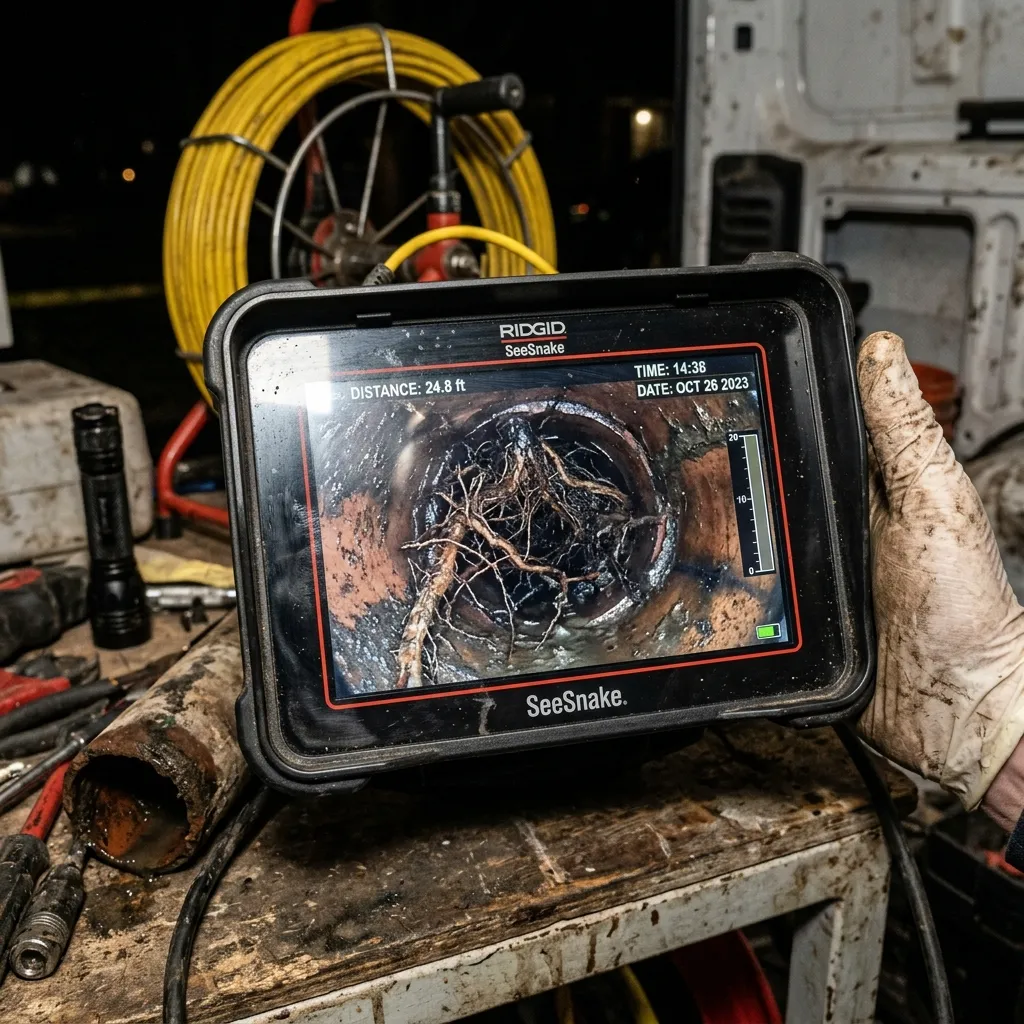
Anoka features mature neighborhoods with stately silver maples, cottonwoods, and willows. These trees produce aggressive root networks seeking moisture and warmth. Local clay soils shift during seasonal freeze-thaw cycles, cracking aging buried pipes. Consequently, tree root intrusion is a top plumbing problem across Anoka properties.
How Tree Roots Get Into Your Sewer Line
Even hairline cracks in older clay or concrete pipes allow root access. Tree roots follow underground moisture trails toward warm sewer water. Fine feeder roots penetrate loose joints, expanding rapidly inside the pipe cavity. They catch grease and paper debris, causing total sewer blockages.
This problem is especially common in Anoka homes built before 1970. These properties feature clay or cast iron sewer laterals operating for 50–75 years. Aging mortar joints loosen over decades, creating ideal entry gaps for root penetration.
Warning Signs of Root Intrusion in Your Anoka Sewer Line
- Multiple slow drains — simultaneous sluggish drainage across toilets, sinks, and tubs points to a main sewer line obstruction
- Gurgling sounds from toilets or floor drains after running water elsewhere
- Sewage odors inside the home without an obvious source
- Frequent drain clogs that return within weeks of being cleared
- Lush, unusually green patches of grass above your sewer line route — a sign of nutrient-rich sewage seeping into the soil
- Multiple fixtures backing up at once — a toilet backup simultaneous with a floor drain backup is almost always a main line issue
The Diagnosis: Sewer Camera Inspection
Confirming root intrusion requires a professional sewer camera inspection. A licensed technician feeds a fiber-optic camera through your cleanout to inspect the line in real time. The video reveals root density, exact obstruction depth, and pipe condition. This visual assessment determines the ideal trenchless repair strategy.
Repair Options for Root-Invaded Sewer Lines in Anoka, MN
When roots infiltrate underground pipes, modern sewer line repair in Anoka, MN restores flow. Trenchless repair eliminates root intrusions without tearing up your lawn.
Hydro Jetting (Clearing)
High-pressure hydro jetting scours away fine root masses and debris. This restores drain flow immediately. However, roots return within months unless the entry crack is permanently sealed or replaced.
Trenchless Pipe Lining (CIPP)
Cured-in-place pipe (CIPP) lining repairs moderate root damage effectively. Plumbers insert a resin-soaked sleeve into the existing line and inflate it. Once cured, it forms a jointless pipe within a pipe. The epoxy barrier blocks all future root growth and carries a 50-year warranty.
Pipe Burst Replacement
Severely damaged lines benefit from trenchless pipe bursting. A hardened bursting head fractures the old pipe while pulling a new seamless HDPE line behind it. This process requires just two small access pits, avoiding extensive lawn excavation.
Traditional Open-Trench Replacement
When the pipe has multiple severe failure points or the soil conditions prevent trenchless methods, traditional excavation and replacement may be necessary. Your plumber will recommend this only when it’s the most cost-effective option for the specific situation.
Can You Prevent Root Intrusion?
Proactive care prevents future root intrusions. Keep newly planted trees at least 10 feet away from your underground sewer route. Avoid moisture-hungry species like willows, cottonwoods, or silver maples near utility laterals.
Schedule a sewer camera inspection every 3 to 5 years. Routine preventative checks catch small root intrusions before they cause catastrophic backups.
The Bottom Line
Root intrusion is common in older Anoka neighborhoods. Catching roots early prevents long-term pipe wall collapse. Spending a few hundred dollars on camera inspection prevents $5,000 to $15,000 in emergency excavation.
If drains run slowly or backup repeatedly, schedule a diagnostic check before damage spreads.